
Event Agenda
Day 1 – October 21Cecil Community Centre, Toronto Neighbourhoods
Place:Learning from the field through immersive community tours and connections with local leaders |
Day 2 – October 22Evergreen Brickworks
People:Building skills and supports to continue, sustain, and equip us for the next horizon of changemaking |
Day 3 – October 23Evergreen Brickworks
Policy & Systems Change:Creating the enabling environment for systems change and collective action |
|
9:00am Gather together to connect as a learning community.
1:00 - 4:00pm Experience one of six immersive community tours to learn about local initiatives, including:
Optional evening gathering to share stories and build connections |
9:00am Reconvene the learning community
Plenary – Navigating shifting ground
Initiative showcase
Music, art, and walks
1:00 - 2:30pm Deep-dive workshops – Building practical changemaking skills, including:
3:00 - 4:00pm Peer Input Process
4:00 - 5:00pm Plenary – 10 years later: lessons learned from longer-term initiatives about sustaining community-based work
6:00 - 8:00pm Evening Reception
|
9:00am Reconvene the learning community
Getting to systems change – learning session, interactive activity, group sensemaking
The Next Horizon panel – What system leaders are anticipating, and the role of place-based collaboration as the engine of systemic change
11:00 - 12:00pm Block 1 - Advocacy & movement building Tool carousel of effective strategies and actions
1:00 - 2:00pm Block 2 - Prototyping, scaling, and embedding new solutions
2:30 - 4:00pm Block 3 - Policy Change Contribute to a community-driven policy change agenda
4:00 - 4:30pm Close the learning community |
PANEL: 10 years later: lessons learned from longer-term initiatives about sustaining community-based work
Speakers: Ritika Kurup – Saahas LLC, Michelle Staples – Mayor, City of Duncan, Jen Casorso – EndPovertyEdmonton, Jana Comeau – Business Community Anti-Poverty Initiative (BCAPI) and Adriana Beemans – Metcalf Foundation
This session facilitates a critical discussion on recognizing contemporary forms of colonialism, addressing anti-Black racism, and exploring the structural invisibility experienced by African diaspora communities, while offering practical strategies for building meaningful allyship grounded in reciprocity, accountability, and shared advocacy. Participants will leave with tools to strengthen cross-community relationships, challenge systemic barriers, and support collaborative approaches to social change that advance racial justice and uphold Indigenous sovereignty.
Anti-Racism & Allyship
Speakers: Maylinda Bernard Hovington & Savroop Shergill - Tamarack Institute
This session facilitates a critical discussion on recognizing contemporary forms of colonialism, addressing anti-Black racism, and exploring the structural invisibility experienced by African diaspora communities, while offering practical strategies for building meaningful allyship grounded in reciprocity, accountability, and shared advocacy. Participants will leave with tools to strengthen cross-community relationships, challenge systemic barriers, and support collaborative approaches to social change that advance racial justice and uphold Indigenous sovereignty.
Building Trust Across Difference
Speakers: Sa'adatu Usman - Global Citizen Incorporated, Saima Maheen - The Centre for Civic Religeous Literacy, and Sylvia Cheuy - Tamarack Institute
As Canadian communities grow more diverse, many organizations struggle to have productive conversations across difference, often avoiding them out of uncertainty or fear of conflict — missing opportunities to build trust and act together. This session shares practical lessons on building trust across differences, fostering shared ownership, and creating sustainable collaboration without asking people to compromise who they are to belong. Participants will also explore the value of intergenerational exchange — connecting youth, elders, newcomers, and long-time residents — and leave with tools for building community capacity from existing strengths rather than deficits.
Unlocking Abundance: How Institutional Scale and Community Leadership Create Hope for Food Access and Economic Prosperity
Speakers: Ryan Noble and Sahar Ghafouri, North York Harvest Food Bank
Join North York Harvest Food Bank (NYHFB) for an exploration of how community leadership and cross-sector collaboration can create new pathways to food access and transformational economic prosperity. Through evolving partnerships between North York Harvest Food Bank, FoodReach and other partners, this case study will examine how a community-rooted initiative has leveraged institutional scale to strengthen local food systems and move toward a sustainable social enterprise model. Participants will learn about NYHFB's journey towards adopting a Community Wealth Building framework, how they have implemented these priorities, leveraged food bank infrastructure, and built partnerships towards this common goal with other like-minded organizations: all while navigating a very traditionally charity-focused landscape.
Community Wealth
Speakers: Jenna Stevanato – Buy Social Canada, Sahar Ghafouri and Ryan Noble – North York Harvest Food Bank, Julian Knight – Tapestry Community Capital, and Robin Wisener - Tamarack Institute
This session will focus on practical tools and examples for community wealth building (CWB) in Canadian communities with talks from Robin Wisener, Tamarack, Sahar Ghafouri and Ryan Noble, North York Harvest Food Bank, and BuySocial Canada. We all bring deep experience in key elements of the five pillars of CWB. We will engage participants in the practical application of CWB in big cities, rural settings and international experience through examples and practice of these communities. Communities are already engaged in elements of a CWB practice; participants will leave with practical approaches to connecting all elements of a CWB plan beginning with understanding the roots of capital and local assets of community value and linking to local poverty reduction.
Intentional Collaboration with Lived Expertise
Speakers: Celeste Flores – Pacific Immigrant Resources Society (PIRS), Elaine Capes – DC MOVES, Yas Hassen - Tamarack Institute
Learn effective, best practices for collaborating intentionally with people who bring lived and living experience to their work. Instead of treating lived expertise as a checkbox, we focus on equitable partnership, centring power sharing, removing systemic barriers, noticing bias.
October 23, 2026
Day 3 WOrkshops
PANEL: The Next Horizon
Anna Feredounnia-Meawasige – The Indigenous Support Project, Dreama Gentry – Partners for Rural Impact, and Surabhi Jain – Surabhi Jain Consulting
In this final plenary, we will explore what three collaborative, creative, systems changing leaders see as our possible futures – and see being the role of place-based collaboration across lines of perceived difference.
Dreama, Anna, and Surabhi will share their possible future, and the role of local, community-driven change in achieving it. After diving more deeply into their scenarios, we'll look to the audience to share their view of what's possible. We'll leave the session with the fodder for a visual representation of what could be true, and the commitments we're each willing to hold.
Block #1: Methods for Advocacy and Movement Building (11:00 AM)
From Shared Measurement to Collective Action
Speaker: Melissa Blair - Thrive Okanagan
A practical approach to bringing diverse community partners along in co-creating shared goals and measures, mapping their collective contributions, making sense of the results together, and turning shared measurement into shared understanding, ownership, and collective action.
Report Cards
Speakers: Alicia Bjarnason – Canadian Coalition of Women in Engineering, Science, Tech, and Trades Tech needs
A method to audit equity gaps and communicate a grade in order to increase awareness of the status and structural barriers of key issues and translate them into targeted advocacy pathways.
Community-Engaged Playbook
Speaker: Andrea Gunraj - CivicAction
Framework for Community-Centred, Justice-Oriented Action
Speaker: Julius Lindsay - The Prismatic Project
Grassroot Advocacy Pathways
Speaker: Aaron Hawkins - Inspiring Communities
Journalism and Community Radio
Speakers: Alex Freedmam - Community Radio Fund of Canada and Kim Wheeler - Indigenous Journalist, Executive Producer, Words & Culture
A new way of thinking about community broadcasting and local media—not simply as a communications platform, but as the social infrastructure that connects people, organizations, institutions, cultures, and local leadership. Leave with practical ideas for integrating community media into systems-change strategies.
Block #2: Community Innovation (1:00 PM)
Prototyping, scaling, and embedding new solutions
The Equity Opportunity
Speaker: Gina Leslie - LEAP
Examples from our most recent 5-year initiative, The Equity Opportunity (TEO) of how community-rooted innovations successfully transition from localized initiatives to scaled program portfolios. Understand the capacity diagnostics, operational transformations, and strategic trade-offs required when expanding program reach, and understand how LEAP's social purpose organizations move beyond isolated program delivery to build cross-sector corporate partnerships, shared infrastructure, and inter-agency referral networks.
The Village Square
Speaker: Dokun Nochirionye - Thriving African Families
Village Square began as a simple idea: strengthening families requires more than standalone services - it requires trusted relationships, cultural belonging, and community ownership. We prototyped the model by integrating parenting education, peer support, healing conversations, shared meals, and practical resources into a single, community-led experience for families of African heritage in Greater Sudbury. This session shares the journey from prototype to practice, including the design decisions, adaptations, challenges, and lessons learned. Participants will gain practical insights into testing community-led ideas, building partnerships that support sustainability, using feedback to refine programs, and embedding successful approaches into organizational practice so they can grow beyond a single initiative.
Canadian Biosphere Regions Association
Speaker: Kate Potter - Canadian Biosphere Regions Association
From Projects to Systems Change: Lessons from Ten Years of Building the Conditions for Transformation
Speaker: Lucie Bourgeois - Umalia
Colmeal – An Approach for Community-Led Development
Speaker: Molly Grove - Salanga
Two Tools to Assess Capacity to Prototype, Scale, and Embed Transformative Innovations
Speaker: Meg Hargreaves - NORC
In this session, I will briefly describe two projects - the MacArthur Foundation’s Safety and Justice Change criminal justice reform initiative in communities across the U.S., and the CDC-funded Preventing ACEs (Adverse Child Experiences) with Linkages and Stronger Systems (PALSS) project. Because traditional evaluation methods are not designed to capture the complexities of community-led system change initiatives, I created, tested, and validated two tools designed specifically for this purpose. I will present and share these two tools - 1) the Collective Community Capacity survey, and 2) the Systems Change Measurement Rubric‚ show how they have been used successfully in these current projects and how they can be applied to future fair and sustainable climate initiatives.
Block #3: Macro Systems Shift (2:30 PM)
Highlighting trends and priorities in macro policy change and agendas
Our afternoon concurrent sessions are an opportunity for participants to learn about current public policy priorities and emerging themes from across Tamarack's Networks for Change, while exploring barriers, opportunities, and strategies for advancing community impact.
Collaborative Funding & Transformative Change
Speakers: Anshika Kushwaha - Workforce Funders Collaborative (WFC), Randy Sa’d - Flourishing Enterprise Institute, Charlie Leadbeater - Systems Shift, Alyssa Obrand - Finance, Sustain, Engage (FES) and Danya Pastuszek - Tamarack Institute
The Canadian Collaborative Funding Initiative (CCFI), jointly stewarded by Tamarack, SETSI and Philanthropic Foundations of Canada, is building a field of practice around collaborative funding in Canada. It is documenting what already exists, developing shared language for different approaches, and exploring the commitments and conditions that can make collaboration more effective and impactful. This interactive session will begin with a panel featuring diverse perspectives on the opportunities and challenges of collaborative funding, followed by a World Café where participants will help shape CCFI's emerging taxonomy, draft commitments for funders and charitable organizations, and database of collaborative funding examples. Participants will have opportunities to contribute their own examples, connect with the CCFI community, and express interest in future experimentation.
Community Wealth Building
Speaker: Robin Wisener - Tamarack Institute
Climate Justice
Speaker: Kyra Chisholm – Climate Action Waterloo Region
Details coming soon
Belonging
Speaker: Sa’adatu Usman – Global Citizen
Entrepreneurship and Youth Employment
Speakers: Jasmine Redfern – Small Economy Works and Phillip Mock – Vision Us
Meaningful youth employment requires more than individual programs. It requires communities, institutions, businesses, and policymakers working together to address systemic barriers and create pathways for young people to thrive.
Through community examples and facilitated discussion, participants will explore local innovations, emerging policy opportunities, and collective strategies for advancing youth employment and entrepreneurship while building more equitable and inclusive communities.
Poverty
Speakers: Elaine Capes – DC Moves (Dufferin County) and Tom Cooper – Hamilton Poverty Reduction
Details coming soon
Immersive community tours
See below for a list of tour options Summit registrants will have on Wednesday afternoon.
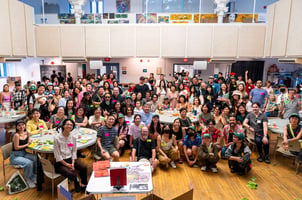
Toronto Chinatown Land Trust
Chinatown is an important part of Toronto’s cultural landscape, however it is in a battle against the potential loss of the character, identity and roots of their neighbourhood.
The Toronto Chinatown Land Trust (TCLT) tour provides a look at community-led land stewardship and cultural preservation. Set in one of Toronto’s most historic neighbourhoods, this walking tour highlights efforts to protect spaces for local residents, businesses, and cultural life. This tour explores how collective ownership, community governance, and trust-building support long-term resilience.
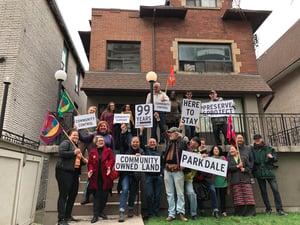
Parkdale Neighbourhood Land Trust
Parkdale is one of the few downtown neighbourhoods that have remained relatively affordable and accessible to low-income communities, but it is under intense pressures of gentrification, housing financialization and displacement.
The Parkdale Neighbourhood Land Trust (PNLT) tour showcases a community-led model of land ownership that protects beyond affordability and stability by enabling transformative change. Built through strong local relationships, it keeps decision-making in community control. This tour highlights how shared ownership can advance equity, belonging, and resilience.

Toronto Community Benefits Network and Little Jamaica Community Land Trust
After 15 years of construction, the Eglington Cross Light Rail Transit is finally open. This large-scale infrastructure project catalyzed the community benefits movement in Toronto.
The Toronto Community Benefits Network (TCBN) and Little Jamaica Community Land Trust (LJCLT) tour highlights how communities are organizing to ensure that infrastructure can generate jobs, address displacement, build community wealth and advance Black self-determination through land stewardship and cultural preservation.
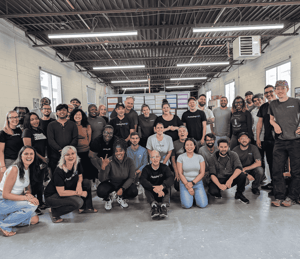
Building Up
Social enterprises pair business innovation with a social mission to address social inequality and environmental challenges, and are often sought as part of social procurement strategies.
The Building Up (BU) tour showcases how social enterprises can help people overcome barriers to employment. BU provides a suite of training and supports their participants need to access upward wealth mobility, leading to long-term careers in the construction industry. This tour focuses on how investing in people strengthens agency, leadership, and long-term economic inclusion.
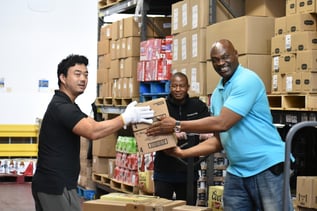
North York Harvest Food Bank
Food insecurity is rooted in income insecurity, and innovative approaches are needed to address the systemic causes of poverty.
The North York Harvest Food Bank (NYHFB) tour highlights how it goes beyond emergency food distribution by offering workforce training, community wealth building, and focused advocacy to tackle the root causes of food insecurity. This tour also explores how it works with sectoral partners to develop long-term solutions rooted in dignity and access.
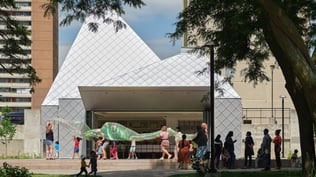
Mabelle Arts
Mabelle Park is the first park in Canada designed to respond to the unique needs and desires of residents living together in a high density, low-income tower community.
The Mabelle Arts tour highlights how long-term, resident-led arts practices can transform public spaces into vibrant social infrastructure. Co-created with hundreds of neighbours, Mabelle Park reflects a decade of community visioning, where art becomes a tool for connection, care, and shared ownership. This tour shows how creativity can build belonging and turn underused spaces into hubs of pride, artistic creation, and connection to nature.